

Some artists define a decade. Eddie Money defined two. The Brooklyn-born rock singer who once carried a badge for the NYPD traded his uniform for a guitar – and built a $20 million net worth doing what he loved most: performing live, recording hit albums, and connecting with fans who never forgot his voice.
When Eddie died on September 13, 2019, at the age of 70, he left behind a legacy that stretched far beyond his chart numbers. He left behind five children, a devoted wife, and a catalog of songs that still fill classic rock radio stations every single day.
Eddie Money Net Worth – Quick Facts
| Detail | Info |
|---|---|
| Full Name | Edward Joseph Mahoney |
| Net Worth at Death | $20 Million |
| Date of Birth | March 21, 1949 |
| Date of Death | September 13, 2019 |
| Cause of Death | Stage 4 Esophageal Cancer |
| Height | 5 ft 11 in (1.80 m) |
| Wife | Laurie Money (married 1989) |
| Children | 5 |
| Nationality | American |
Early Life – From Brooklyn Cop to Rock Star
Born in Brooklyn, Raised in Levittown
Edward Joseph Mahoney came into the world on March 21, 1949, in Brooklyn, New York City. He grew up in a large Irish Catholic family and spent most of his childhood in Levittown and later in Plainedge on Long Island. His teenage years were shaped by Queens, street culture, and an early love for music.
He began singing on street corners at just 11 years old. As a teenager, he played in local rock bands – not because it seemed like a career path, but because he simply could not stop. He graduated from Island Trees High School in 1967, though the road there was not smooth.
Following Family Into the NYPD
Law enforcement ran deep in the Mahoney bloodline. His father Daniel, his brother, and his grandfather all served in the New York City Police Department. Following their lead felt natural – so Eddie joined the NYPD as a trainee after high school.
But police work never captured his heart the way music did. The shift schedules, the structure, the uniform – none of it matched the restless energy inside him. He knew it. His family knew it. The question was what he would do about it.
The Move to Berkeley That Changed Everything
In 1968, Eddie made the decision that would redefine his life. He packed up and moved to Berkeley, California, leaving behind the NYPD and everything familiar. He began studying with vocal coach Judy Davis and immersed himself in the Bay Area music scene.
He started performing regularly at clubs across the San Francisco Bay Area, building his following one show at a time. His raw energy and powerful voice caught the attention of legendary concert promoter Bill Graham – and that introduction changed the entire trajectory of his career.
Eddie Money’s Music Career and Rise to Fame
Columbia Records Deal and 1977 Debut
Bill Graham’s endorsement opened the door to a recording contract with Columbia Records. In 1977, Eddie released his self-titled debut album – and it announced his arrival loudly. The album sold approximately 2 million copies, powered by two charting singles that introduced him to rock fans across America.
One of those singles was “Two Tickets to Paradise” – a song so catchy, so full of optimism, that it became one of the defining rock anthems of the late 1970s. The other was “Baby Hold On.” Both tracks showcased a vocalist who understood the emotional engine of a great rock song.
Biggest Hit Songs
Eddie Money’s discography reads like a classic rock playlist. His most beloved songs include:
- “Two Tickets to Paradise” (1977) – His breakthrough hit and signature song
- “Baby Hold On” (1977) – Off his debut album, charted in the Top 40
- “Think I’m in Love” (1982) – A heavy rotation MTV staple
- “Shakin'” (1982) – One of his most energetic live performances, became an MTV fan favorite
- “Take Me Home Tonight” (1986) – His biggest commercial hit, peaked at #4 on the Billboard Hot 100 and featured a duet with Ronnie Spector
- “Walk on Water” (1988) – Another Top 10 hit from the album Nothing to Lose
“Two Tickets to Paradise” – The idea came to Eddie while he was standing outside a music store in Berkeley. He spotted two concert tickets and that line – “I’ve got two tickets to paradise” – arrived fully formed. He wrote the whole song that same night. The simplicity is the song’s strength: no complicated metaphor, just the pure joy of a promise.
“Take Me Home Tonight” – The recording included an unusual decision: Ronnie Spector’s vocal from “Be My Baby” was borrowed directly – with full permission. Ronnie not only gave her blessing but came into the studio and recorded live vocals. This collaboration bridged the 1960s girl-group sound with 1986 rock radio in a way that rarely works – but this time worked perfectly. The track earned Eddie a Grammy nomination for Best Male Rock Vocal Performance in 1987.

MTV Breakthrough and Mainstream Success
The MTV era was tailor-made for Eddie Money. He had the looks, the charisma, and the songs. Videos for “Think I’m in Love” and “Shakin'” played constantly in the early 1980s, introducing him to a new generation of rock fans.
He also appeared on landmark music television programs including The Midnight Special, Solid Gold, and American Bandstand. These appearances kept him visible between album cycles and reinforced his status as a genuine rock star.
Drug Addiction, Decline, and the 1986 Comeback
Success brought its shadows. By the mid-1980s, following the 1983 album Where’s the Party?, Eddie’s career began to lose momentum. Drug addiction took a serious toll – on his health, his relationships, and his output.
The low point came in 1980, when he overdosed on a synthetic barbiturate. The incident damaged the sciatic nerve in one of his legs. He was unable to walk for months and developed a permanent limp as a result. It was a brutal wake-up call – but even that was not enough to stop the spiral immediately.
His comeback arrived in 1986 with Can’t Hold Back – a platinum album that proved he still had everything it took. The album produced “Take Me Home Tonight,” his career-defining single. The music industry had written him off. His fans had not.
Grammy Nomination and Later Career
The Grammy nomination in 1987 validated what fans already knew. Eddie Money belonged at the top of rock radio. He followed up with Nothing to Lose in 1988, which produced “Walk on Water” – another Top 10 hit.
His later career included film music contributions, a brief radio hosting stint on WSRV’s Money in the Morning in 2011, a memorable GEICO commercial in 2012, and a role in the Netflix series The Kominsky Method in 2018. In 2018, he also launched “Real Money” on AXS TV – a reality show documenting his life and family.
Eddie Money Awards and Recognition
| Award / Recognition | Year | Details |
|---|---|---|
| Grammy Nomination – Best Male Rock Vocal | 1987 | For “Take Me Home Tonight” |
| American Music Award Nomination | 1983 | Favorite Pop/Rock Male Artist |
| MTV Heavy Rotation | 1982-1988 | Multiple videos in constant airplay |
| RIAA Gold Single Certification | 1986 | “Take Me Home Tonight” – 500,000+ copies |
| Bay Area Music Awards (BAMMIES) | 1980s | Multiple nominations, SF music scene contributions |
| Hollywood Walk of Fame Campaign | 2019-present | Fan and family push for posthumous star |
Eddie Money Complete Discography
| Album | Year | Label | Certification |
|---|---|---|---|
| Eddie Money (self-titled) | 1977 | Columbia | 2x Platinum |
| Life for the Taking | 1978 | Columbia | Gold |
| Playing for Keeps | 1980 | Columbia | – |
| No Control | 1982 | Columbia | Gold |
| Where’s the Party? | 1983 | Columbia | – |
| Can’t Hold Back | 1986 | Columbia | Platinum |
| Nothing to Lose | 1988 | Columbia | Gold |
| Right Here | 1991 | Columbia | – |
| Shakin’ with the Money Man | 1997 | Priority | – |
| Wanna Go Back | 2019 | Mailboat | – |
| Brand New Day (EP – Posthumous) | 2020 | Estate Release | – |
Eddie Money Net Worth – How Did He Make His Money?
Album Sales Earnings
Eddie Money’s wealth was built album by album. His catalog sold millions of copies across more than four decades. Approximate earnings from key releases:
| Album | Year | Approx. Copies Sold | Estimated Earnings |
|---|---|---|---|
| Eddie Money (self-titled) | 1977 | ~2 million | ~$2,600,000 |
| Life for the Taking | 1978 | ~1 million | ~$1,300,000 |
| Can’t Hold Back | 1986 | ~1 million (Platinum) | ~$1,300,000 |
| No Control | 1987 | ~1 million | ~$1,300,000 |
| Greatest Hits: Sound of Money | 1990 | ~500,000 | ~$650,000 |
Album sales alone account for several million dollars of his overall wealth. Add ongoing streaming royalties and licensing income – and those numbers keep growing even after his death.
Concert Tours and Live Performance Income
Eddie Money was above all else a live performer. He toured relentlessly for over four decades, headlining venues and playing summer festivals. Concert revenue for a mid-tier rock act of his era could range from $50,000 to $250,000 per show. Over hundreds of shows across four decades, touring was likely his single largest income source.
Television – Reality Show “Real Money” on AXS TV
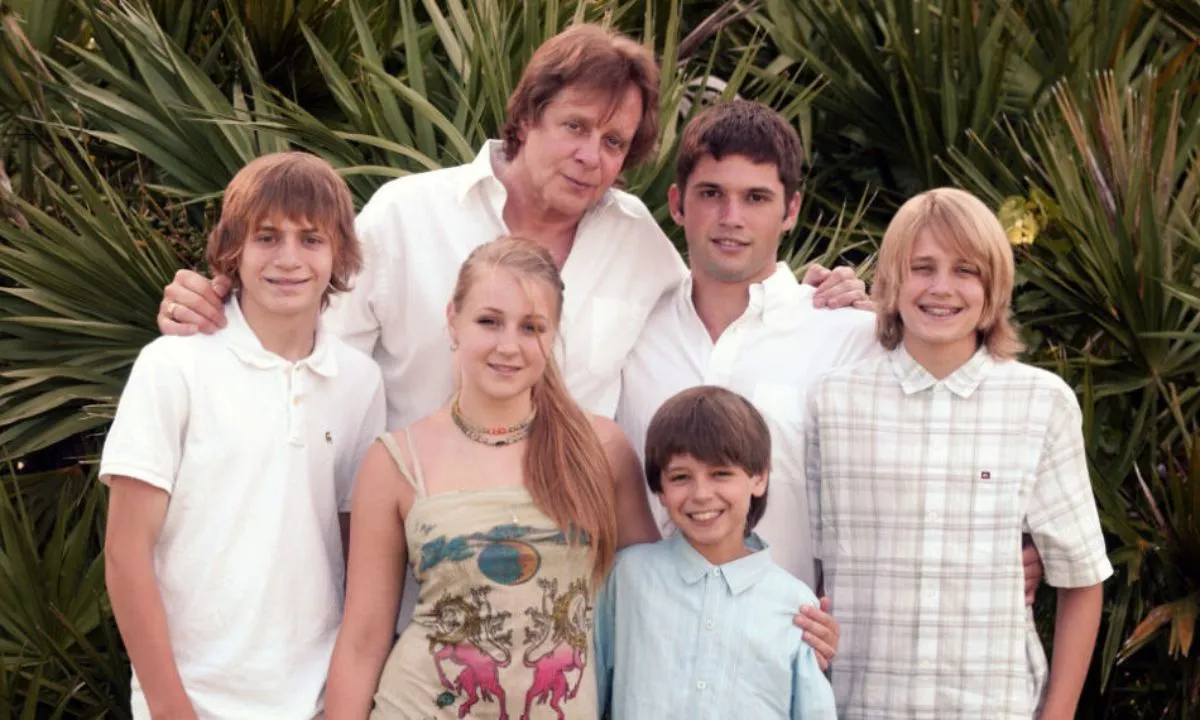
“Real Money” premiered on AXS TV in 2018 and ran for one season. The show gave viewers an unfiltered look at Eddie, Laurie, and their five children – Zachary, Jessica, Joseph, Desmond, and Julian. Episode topics ranged from Eddie working in the music studio to family road trips and honest conversations about his health.
The tone was deliberately unpolished – no reality TV glamour, just the real life of an aging rock star who happened to still be in love with his wife and his craft. Critics noted that Eddie on screen was as genuine as Eddie on stage. No performance, just who he was.
The show re-engaged Eddie’s fanbase in 2018 and played a meaningful role in promoting his final studio album, Wanna Go Back. Television income – including appearances in The Kominsky Method, The King of Queens, and The Drew Carey Show – added meaningful earnings to his portfolio over the years.
Radio Hosting, GEICO Commercial, Music Licensing and Royalties
His 2012 GEICO commercial brought him back into mainstream pop culture consciousness. Radio work, though brief, added to his profile. Music licensing – placing songs in films, TV shows, and advertisements – generated passive income that continued long after the original recordings were made.
Songs like “Take Me Home Tonight” and “Two Tickets to Paradise” are evergreen licensing properties. They appear in movies, sports broadcasts, and TV shows regularly – each placement generating royalty income for his estate.
Eddie Money’s House – Where Did He Live?
Eddie Money lived well. At various points in his life, he maintained homes in Manhattan, Los Angeles, the San Francisco Bay Area, and Florida. The Bay Area connection ran deepest – it was where he launched his career, where he built his reputation, and where his family put down roots.
His lifestyle reflected the classic rock-star template of the 1970s and 80s: comfortable, mobile, and always close to where the next show was happening. His homes were not extravagant by celebrity standards, but they reflected a man who valued family life alongside his music career.
Eddie Money’s Wife – Laurie Money
Who Is Laurie Money?
Laurie Harris Money became Eddie’s partner, his anchor, and ultimately the person who helped him find stability after years of chaos. She was a constant presence through his comeback years, his health struggles, and the final chapter of his life.
Before Laurie, Eddie had a brief marriage to Margo Lee Walker on Valentine’s Day in 1984 in Moraga, California. That marriage ended in divorce not long after.
Their Marriage in 1989 and 30-Year Relationship
Eddie and Laurie married in 1989 and stayed together for thirty years – until his death. That kind of longevity in the music industry is rare. The couple raised five children together, built a home across multiple states, and starred together in the AXS TV reality series that gave fans a window into their family life.
Their relationship had its tests – his drug and alcohol struggles continued for years after their marriage. Eddie joined a 12-step program in 2001 and reported being sober by 2003. Laurie remained beside him through all of it.

Laurie Money’s Estimated Net Worth
Laurie Money’s individual net worth is not publicly documented in detail. As the primary heir to Eddie’s estate – valued at approximately $20 million – her current financial position is significant. She also managed much of the family’s public presence during Eddie’s later years and continues to be the steward of his legacy.
Life After Eddie’s Death
Laurie has continued to honor Eddie’s memory publicly since his passing. The posthumous release of the “Brand New Day” EP in April 2020 – five songs Eddie recorded before his death – was handled with care. She has kept his social media presence active and his catalog visible for new listeners discovering him for the first time.
Eddie Money’s Children
Eddie and Laurie had five children together:
- Zachary Money – Followed his father into music. A guitarist and performer in his own right.
- Jessica Money – Also musically inclined and appeared in the family’s AXS TV show.
- Joseph Money – The couple’s third child.
- Desmond Money – Appeared alongside the family in “Real Money.”
- Julian Money – The youngest of the five children.
Several of the Money children have pursued music, keeping Eddie’s artistic legacy alive within the family. Their presence in the AXS TV reality show gave viewers a genuine portrait of a rock star as a father – something Eddie seemed to take as seriously as any performance.
Eddie Money Height and Personal Life
Eddie Money stood 5 feet 11 inches tall – a commanding presence on stage that matched his equally commanding voice. He had the physical energy of a performer who genuinely loved being in front of a crowd, and that came through in every show he played.
Off stage, Eddie was known as warm, self-deprecating, and surprisingly candid about his failures. He did not hide his drug history. He spoke openly about his addiction, his overdose, and the limp that never fully went away after 1980. That honesty made fans feel close to him in a way that polished celebrity personas rarely allow.
He loved his family fiercely. The AXS TV show was not manufactured reality – it was a genuine portrait of a man who had survived long enough to enjoy what he had built.

Eddie Money’s Cause of Death
Health Struggles During the 2019 Tour
The warning signs emerged during what was supposed to be a routine tour. In 2019, mid-tour, Eddie required heart surgery and subsequently contracted pneumonia. Several tour dates were cancelled. Fans were told it was a temporary setback.
It was not.
Stage 4 Esophageal Cancer Diagnosis
In August 2019, just one month before his death, Eddie’s family publicly confirmed that he had been diagnosed with stage 4 esophageal cancer. His decades of cigarette smoking were identified as a contributing factor.
The diagnosis was devastating but not surprising to those close to him. Eddie had smoked for most of his adult life – a habit he had picked up long before anyone fully understood the long-term risks.
Death on September 13, 2019 in Los Angeles
The music world had known the news was coming, but that did not soften the blow. Eddie had been on the road just weeks before. He had been releasing new music. He had been very much alive – in every sense that mattered.
Tributes from the Music World
Rock radio stations across the country played Eddie Money marathons on the day of his death. Fellow musicians, promoters, and industry figures shared memories of his generosity and his work ethic. Fans flooded social media with personal stories – concerts they had attended, songs that had marked moments in their lives.
His family released a statement describing him as a devoted husband, father, and performer. That triple identity – the three roles he played simultaneously throughout his life – captured him perfectly.

Eddie Money’s Legacy and Estate After Death
At his death, Eddie Money’s estate was valued at approximately $20 million. His primary heirs were his wife Laurie Money and their five children. The estate includes ongoing music royalties, licensing income from his extensive catalog, and the intellectual property rights to decades of recordings.
In April 2020, the posthumous EP “Brand New Day” was released – five tracks Eddie had recorded before his diagnosis progressed. The project had originally been planned as a full album. His illness prevented the complete version from being finished. The five songs that survived are a quietly moving final statement from a man who never stopped working.
His catalog continues to generate revenue. “Take Me Home Tonight” alone appears regularly in films, TV shows, and sports broadcasts. “Two Tickets to Paradise” is a staple of classic rock radio. These songs are not going anywhere – and neither, financially, is the estate that owns them.
Frequently Asked Questions
What was Eddie Money’s net worth when he died?
Eddie Money had an estimated net worth of $20 million at the time of his death in September 2019. This wealth came from album sales, decades of touring, television appearances, music licensing, and royalty income accumulated over a 40-plus year career.
What were Eddie Money’s peak earning years?
Eddie Money’s peak earning years were between 1977 and 1988 – the stretch from his debut album to Nothing to Lose. During this period, he released his most commercially successful records, toured extensively, and became a fixture on MTV. Industry estimates suggest he was earning between $3 to $5 million annually during his best years in the mid-to-late 1980s.
What was Eddie Money’s cause of death?
Eddie Money died from complications related to stage 4 esophageal cancer. His family announced the diagnosis in August 2019, one month before his death on September 13, 2019. Years of cigarette smoking were cited as a contributing factor.
Who is Eddie Money’s wife?
Eddie Money’s wife was Laurie Money (nee Laurie Harris). They married in 1989 and remained together for 30 years until his death. Laurie appeared alongside Eddie and their children in the AXS TV reality series “Real Money” and has continued managing his legacy since his passing.
How many children did Eddie Money have?
Eddie Money had five children with his wife Laurie: Zachary, Jessica, Joseph, Desmond, and Julian. Several of his children have pursued music careers, carrying on his artistic legacy.
Where did Eddie Money live?
Over the course of his life, Eddie Money maintained homes in Manhattan, Los Angeles, the San Francisco Bay Area, and Florida. He had a particularly deep connection to the Bay Area, where he launched his career in the late 1960s after moving from New York.
How much is Elton John worth?
Elton John’s net worth is estimated at approximately $550 million, making him one of the wealthiest musicians in history. His wealth dwarfs Eddie Money’s, reflecting the difference in global commercial scale.
How rich was Dean Martin when he died?
Dean Martin had an estimated net worth of around $30 million at the time of his death in 1995. By comparison, Eddie Money’s $20 million places him in a similar tier – successful, comfortable, and wealthy by any standard.
How much is Tupac’s estate worth today?
Tupac Shakur’s estate is estimated to be worth approximately $40 to $50 million today, powered by posthumous album releases, film rights, merchandise, and ongoing licensing. Like Eddie Money, Tupac’s catalog has continued generating revenue long after his death.
The Long Road From Brooklyn to $20 Million
Eddie Money’s story does not fit neatly into the standard rock biography template. He was too late a starter, too honest about his failures, and too grounded in family life to be mythologized as a pure rock-and-roll outlaw.
What he was, instead, was real. A kid from Brooklyn who should have become a cop, chose music instead, nearly destroyed himself with drugs, rebuilt his career from the ground up, found love and stability in his 40s, and kept performing right up until his body would not let him anymore.

Rizwan Sultan is a content writer with 4 years of experience covering USA celebrities’ net worth and biographies. He specializes in clear, research-driven profiles and currently contributes engaging, accurate content to CelebInfoHub, helping readers understand the stories behind fame and financial success.