

Anne Rice Net Worth at a Glance — Quick Facts
| Detail | Information |
|---|---|
| Full Name | Howard Allen Frances O’Brien (Anne Rice) |
| Born | October 4, 1941 — New Orleans, Louisiana |
| Died | December 11, 2021 — Rancho Mirage, California |
| Age at Death | 80 years old |
| Net Worth at Death | $60 Million |
| Spouse | Stan Rice (married 1961, died 2002) |
| Children | Michele Rice (deceased), Christopher Rice |
| Primary Genre | Gothic Fiction, Vampire Literature |
Who Was Anne Rice? A Brief Introduction
Anne Rice, born Howard Allen Frances O’Brien on October 4, 1941, in New Orleans, Louisiana, was one of the most distinctive voices in American literary history. She is best known for creating The Vampire Chronicles, a series that forever changed how readers and filmmakers think about vampire mythology.
Where earlier vampire stories leaned on horror and superstition, Rice built deeply philosophical, emotionally complex characters who wrestled with morality, identity, and the burden of immortality.
Her most iconic creation, Lestat de Lioncourt, became one of the most recognizable characters in modern fiction alongside Louis de Pointe du Lac, whose perspective drives the events of Interview with the Vampire. Rice wrote across genres throughout her career, from gothic fiction and erotic literature under pen names to deeply personal explorations of Christian faith. That range commercially and creatively is what ultimately built her net worth.
She was not just an author. She was a brand, a cultural force, and a pioneer of a genre that still dominates bookshelves and streaming platforms decades after she wrote her first page.

Anne Rice Early Life: From New Orleans to Literary Stardom
Anne Rice’s early life was not one of privilege. She was the second of four daughters born to Howard O’Brien, a postal worker and amateur novelist, and Katherine ‘Kay’ Allen O’Brien, who struggled with alcoholism throughout Anne’s childhood. New Orleans, with its Gothic mansions, Catholic rituals, fog-draped cemeteries, and deeply layered culture, became the emotional backdrop for everything Rice would later write.
When Anne was nearly fifteen years old, her mother died, and the family relocated to Texas. She attended Richardson High School, then enrolled at Texas Woman’s University, and eventually transferred to San Francisco State University, where she earned both a Bachelor’s and a Master’s degree in Creative Writing. It was in San Francisco that she met her future husband and where the seeds of her literary career were genuinely planted.
The city shaped her differently than New Orleans had; it gave her distance, perspective, and the quiet space to start turning childhood grief and imagination into fiction. Those years of displacement from her beloved New Orleans, as painful as they were, became essential to the voice that would eventually define gothic fiction.
Anne Rice Husband: Her Love Story with Stan Rice
Anne Rice’s husband, Stan Rice, was a poet and painter she met as a teenager in Texas. They married in 1961 and remained together until his death more than four decades later. Their relationship was one of genuine creative partnership. Stan’s poetry and visual art influenced Anne’s prose in ways that are visible throughout her novels, particularly in the lush, emotionally dense language that became her signature.
Stan Rice died in 2002 from brain cancer, a loss that devastated Anne and ultimately accelerated her decision to eventually leave New Orleans permanently. The home they had shared in the Garden District, the city they had both loved, became too heavy with memory after he was gone.
His death marked a quiet turning point in Anne’s life and career; she returned to her Catholic faith more intensely, began writing the Christ the Lord series, and within a few years had relocated to California to be closer to her son.
Stan Rice’s Own Career and Legacy
Stan Rice was not simply Anne’s supportive partner. He was an accomplished artist in his own right. He published multiple poetry collections, including Whiteboy (1976) and Body of Work (1983), and his paintings were exhibited in galleries in San Francisco and New Orleans. While his work never reached Anne’s commercial scale, it was critically respected within literary circles.
After his death from brain cancer in December 2002, Christopher Rice compiled and published a collection of Stan’s poems, ensuring his father’s voice survived beyond his passing. Stan’s creative DNA runs through Anne’s prose style, particularly in the dense, image-heavy sentences and the tendency toward emotional extremity that characterize her best work. His artwork also adorned several editions of Anne’s novels, making him a quiet but permanent presence in her published legacy. The mausoleum where both Anne and Stan are buried at Metairie Cemetery in New Orleans is engraved with his poems, a final testament to the depth of their artistic bond.

Anne Rice Children: Michele, Christopher, and Family Tragedy
Anne Rice’s most profound personal loss and one of the most significant influences on her writing was the death of her daughter Michele, who died of leukemia at just five years old in 1972. The grief was catastrophic. Rice later told ABC in a 1993 interview that she channeled that pain directly into writing, pouring her emotions into stories as her primary way of processing the unthinkable.
Michele’s Illness and Its Impact on the Family
Michele Rice was diagnosed with acute granulocytic leukemia, a rare and aggressive form of childhood cancer, at a very young age. The diagnosis came in the early 1970s, a period when treatment options for pediatric leukemia were far more limited than they are today. Anne and Stan Rice spent years managing her illness, navigating hospital visits, experimental treatments, and the daily reality of watching their child suffer without the modern therapeutic tools that exist now.
Michele died in August 1972, just five years old. The financial and emotional toll of her medical care was immense, adding another layer of strain to a young couple already living on limited means. Anne Rice later described this period as one where she and Stan struggled deeply to function. It was only through writing that she began to survive the grief.
Interview with the Vampire, written and completed in 1976, is widely understood to have been born directly from that grief. The character of Claudia, a child turned into a vampire and trapped forever in a child’s body while carrying an adult’s mind, is one of literature’s most heartbreaking metaphors for a parent’s inability to protect a child.
Anne Rice’s son, Christopher Rice, went on to become a successful novelist in his own right. He carries his mother’s literary legacy today, managing her estate and keeping her creative universe alive for new generations of readers. The bond between them was central to Anne’s life in her final years, and it was Christopher who announced her passing to the world.
Anne Rice Books in Order: The Complete Bibliography
Anne Rice published more than 30 novels across multiple genres and pen names, selling over 135 million copies worldwide. Here is her major work, in publication order:
The Vampire Chronicles (13 novels)
Interview with the Vampire (1976) → The Vampire Lestat (1985) → The Queen of the Damned (1988) → The Tale of the Body Thief (1992) → Memnoch the Devil (1995) → The Vampire Armand (1998) → Merrick (2000) → Blood and Gold (2001) → Blackwood Farm (2002) → Blood Canticle (2003) → Prince Lestat (2014) → Prince Lestat and the Realms of Atlantis (2016) → Blood Communion (2018)
Lives of the Mayfair Witches (3 novels)
The Witching Hour (1990) → Lasher (1993) → Taltos (1994)
Christ the Lord Series (2 novels)
Christ the Lord: Out of Egypt (2005) → Christ the Lord: The Road to Cana (2008)
As A.N. Roquelaure — The Sleeping Beauty Series
The Claiming of Sleeping Beauty (1983) → Beauty’s Punishment (1984) → Beauty’s Release (1985) → Beauty’s Kingdom (2015)
As Anne Rampling (Erotic Fiction)
Exit to Eden (1985), Belinda (1986)
Notable Standalones
The Feast of All Saints (1979), Cry to Heaven (1982), Servant of the Bones (1996), Violin (1997)
The Hidden Revenue of A.N. Roquelaure and Anne Rampling
Anne Rice’s decision to publish erotic fiction under pen names was not purely artistic. It was strategically financial. The Sleeping Beauty trilogy, released under the name A.N. Roquelaure beginning in 1983, found a substantial underground readership that her mainstream publisher would never have acquired through conventional channels. By the time Beauty’s Kingdom (the fourth book) was published in 2015, the trilogy had sold over 7 million copies and had been translated into more than a dozen languages.
The erotic novels published as Anne Rampling, including Exit to Eden and Belinda, added a further separate revenue stream. Exit to Eden was adapted into a 1994 film, adding another screen credit and a licensing fee to her earnings. These pen name revenues were entirely independent from her mainstream publishing contracts and represent a significant, often overlooked portion of her lifetime earnings. Analysts estimate the pen name catalog generated $5–10 million in total royalties across Rice’s career, revenue that accumulated quietly alongside her vampire fiction without ever appearing in mainstream sales charts.

How Anne Rice Built Her $60 Million Net Worth
Anne Rice’s wealth was built methodically, over decades, through several distinct income streams.
Book royalties were her primary engine. With over 135 million copies sold, the royalty income alone, even at modest per-book rates, compounds into substantial ongoing revenue. Major publishing deals with Alfred A. Knopf and Random House gave her strong advances on top of royalties, providing financial stability between releases.
Breaking Down the Royalty Math
To understand the scale of Anne Rice’s royalty income, consider the underlying math. With over 135 million copies sold across her career and an average hardcover royalty rate of 10–15% on a retail price of $25–$28, even a conservative estimate places her lifetime royalty earnings from print alone well above $300–$400 million in gross sales. Her personal author share, after agent commissions and publisher deductions, would be in the range of $30–$45 million from print royalties alone.
Film adaptation rights delivered significant lump-sum payments. The 1994 film Interview with the Vampire, starring Brad Pitt and Tom Cruise, was a major commercial success. The 2002 film Queen of the Damned followed. Her erotic novel Exit to Eden was also adapted in 1994. Each film deal transferred adaptation rights for fees that, when combined with back-end royalties, added millions to her estate.
TV rights became increasingly valuable in her later years. AMC’s Interview with the Vampire series, which premiered in 2022, unlocked an entirely new revenue cycle both through the licensing deal itself and through the surge in book sales that followed. Audiobook and digital rights compounded this further, as e-books and audiobooks opened distribution channels that generate passive royalty income indefinitely.
Anne Rice Net Worth Year by Year (2016–2021)
While precise annual figures are difficult to verify, estimated net worth tracking from various financial sources suggests steady growth in Rice’s final years:
| Year | Estimated Net Worth |
|---|---|
| 2016 | ~$50 Million |
| 2018 | ~$53 Million |
| 2019 | ~$55 Million |
| 2021 (at death) | ~$60 Million |
The growth between 2014 and 2018 was driven largely by the return to The Vampire Chronicles with Prince Lestat (2014) and its sequels, a publishing comeback that reignited fan interest and generated strong advance and royalty income after an eleven-year absence from the series.
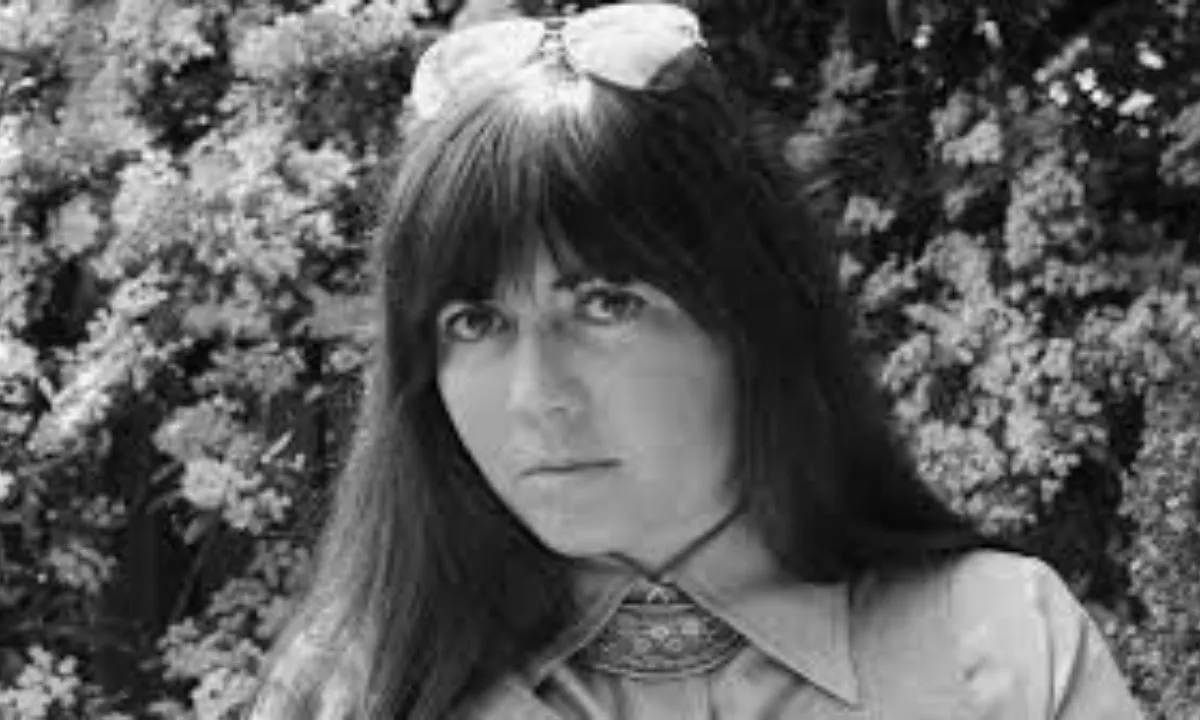
Anne Rice’s House: The Famous New Orleans Mansions
The most iconic property associated with Anne Rice was her Garden District mansion at 1239 First Street, New Orleans, a stunning Victorian house that she purchased and meticulously restored. It became a Gothic landmark in its own right, with fans making pilgrimages to photograph it from the street. Rice sold the property in 2004 for approximately $2.3 million.
The Financial Story Behind 1239 First Street
Anne Rice purchased the Garden District mansion at 1239 First Street in 1989 for approximately $1.1 million, a significant investment at the time that reflected her confidence in her own financial trajectory. Over the next fifteen years, she spent an estimated $1–2 million on restoration and renovation, converting it into one of the most authentically preserved Victorian homes in the South. When she sold it in 2004 for $2.3 million, the sale price represented a modest gain when adjusted for renovation costs, but the property’s real value to her career was immeasurable.
The mansion functioned as both a creative sanctuary and a powerful marketing asset. Her annual Halloween parties at the property during the 1990s drew national media attention and kept her name in cultural conversation year after year, directly supporting book sales at a time before social media existed as a promotional tool. The French Quarter townhouse she also owned placed her within steps of the French Market, Jackson Square, and the cemeteries that populate her fiction, giving her daily immersion in the world she was writing about.
After Stan’s death, Rice purchased a six-bedroom home in Rancho Mirage, California in late 2005, relocating permanently in 2006 to be closer to Christopher in Los Angeles. The California property represented a quieter chapter, less Gothic splendor and more proximity to family in her final years.
Why Did Anne Rice Leave New Orleans?
This is one of the most frequently asked questions about Anne Rice’s personal life, and the answer unfolded in two separate chapters.
Her first departure came as a teenager when her mother died. She moved to Texas and eventually California, where she built her adult life and began her writing career. She returned to New Orleans in 1988, and that homecoming inspired some of her most celebrated work, including The Witching Hour.
Her permanent departure came after Stan’s death in 2002. She stayed for several more years, but the city she had loved so deeply had become inseparable from grief. She also underwent a renewed religious journey during this period, and in 2004–2006, she relocated to California. Rice herself has said the move was partly practical, to be near Christopher, and partly about needing a new beginning after losing her husband.
New Orleans never left her writing, even when she left the city. It remained the spiritual home of every major work she produced.
Film and TV Adaptations That Boosted Anne Rice’s Wealth
The commercial longevity of Anne Rice’s financial estate rests substantially on how well her books translated to screen.
Interview with the Vampire (1994) remains the most significant adaptation financially. Directed by Neil Jordan and starring Brad Pitt, Tom Cruise, Christian Slater, and Kirsten Dunst, it grossed over $223 million worldwide on a $60 million budget. Rice famously opposed the casting of Tom Cruise before production and publicly reversed her position after seeing his performance.
Queen of the Damned (2002), though less well-received critically, still reached global audiences and kept the Vampire Chronicles brand visible. The Young Messiah (2016), based on her Christ the Lord novels, added another screen credit to her estate.
The AMC television series Interview with the Vampire, which premiered in October 2022, became the most culturally impactful adaptation of her work since the original film. It introduced her universe to a new generation of viewers and drove a massive resurgence in book sales, all of which flowed as royalty income to the estate managed by Christopher Rice.

How Much Did the AMC Deal Actually Pay?
Mayfair Witches followed in January 2023, bringing a second active revenue stream from the same licensing arrangement. Combined, these two series represent the most commercially active period for Rice’s intellectual property since the 1994 film, and unlike that older film, the revenue flows more directly to the estate under contemporary deal structures.
Christopher Rice Net Worth and His Role in Anne Rice’s Estate
Christopher Rice, born in 1978, is Anne Rice’s son and literary heir. He is a published novelist in his own right, with works including A Density of Souls and The Heavens Rise. His estimated net worth is approximately $3–5 million, built through his own writing career alongside his role managing his mother’s estate.
Christopher is openly gay and has spoken candidly about his personal life. He is married to author Eric Shaw Quinn, with whom he co-hosts a podcast and collaborates on creative projects.
Since Anne Rice’s death, Christopher has been the primary steward of her literary legacy, working with publishers, studios, and streaming platforms to ensure her characters and stories continue to reach new audiences. His role is both deeply personal and financially significant, as the ongoing commercial value of The Vampire Chronicles intellectual property continues to generate income.
Who Owns the Rights to Anne Rice’s Books?
Christopher Rice controls Anne Rice’s literary estate, including the intellectual property rights to The Vampire Chronicles, Lives of the Mayfair Witches, and her other works. He works with appointed estate managers to oversee licensing, new editions, and adaptation deals.
AMC holds the television adaptation rights for the Vampire Chronicles and Mayfair Witches series. The Mayfair Witches adaptation premiered in 2023. These ongoing TV deals represent a long-term revenue stream that will continue generating income for the estate well into the future.
The rights situation is important because it determines not just who benefits financially from new adaptations, but who has creative control over how Anne Rice’s characters are portrayed. Christopher has been actively involved in ensuring those portrayals honor his mother’s vision.
How Did Anne Rice Die?
Anne Rice died on December 11, 2021, at a hospital in Rancho Mirage, California. She was 80 years old. The cause of death was complications resulting from a stroke. Christopher Rice announced her passing, describing her as someone who had given the world extraordinary stories and extraordinary love.
The literary world responded with immediate and widespread mourning. Fans gathered outside her former New Orleans mansion. Celebrities, authors, and actors who had brought her characters to life shared their tributes publicly.
She was laid to rest in January 2022 at the Rice family mausoleum at Metairie Cemetery in New Orleans, the city she had never truly left in spirit. The mausoleum is also the resting place of Stan Rice and their daughter Michele. One side of the tomb is stained glass; the other three sides are engraved with Stan’s poems.
Anne Rice’s Faith Journey: From Catholicism to Atheism and Back
Anne Rice’s relationship with religion was one of the most dramatic and publicly documented spiritual journeys of any modern author.
She was raised in a devout Catholic household in New Orleans, surrounded by the rituals, iconography, and moral frameworks of the Church. As a young adult in San Francisco, she drifted into agnosticism, a shift reflected in the philosophical restlessness of her vampire characters, who frequently grapple with the absence of God and the meaning of immortality.
In the mid-2000s, following a serious health scare and the death of Stan, Rice publicly returned to Catholicism, channeling that return into the Christ the Lord series, two novels exploring the early life of Jesus from his own perspective. The books were commercially successful and represented a dramatic pivot from vampire fiction.
Then, in July 2010, Rice announced she was leaving institutional Christianity, citing the Church’s positions on homosexuality, science, and women’s rights as incompatible with her conscience, a position made more personal by her son Christopher’s identity. She described herself as committed to Christ but no longer to the institutional Church. This spiritual arc mirrors the themes of her best fiction and reflects a mind that was never content with easy answers.
Anne Rice vs. Other Gothic/Horror Authors Net Worth Comparison
Anne Rice’s $60 million net worth is impressive by any standard, but it takes on additional meaning when compared to peers in the gothic and horror genre.
| Author | Estimated Net Worth | Notable Works |
|---|---|---|
| Stephen King | ~$500 Million | IT, The Shining, Carrie |
| Stephenie Meyer | ~$125 Million | Twilight Series |
| Anne Rice | ~$60 Million | The Vampire Chronicles, Mayfair Witches |
| Neil Gaiman | ~$18 Million | American Gods, Good Omens |
Rice sits firmly in the upper tier of author-brand wealth, well above most literary novelists. What distinguishes her position is the ongoing commercial activity of her intellectual property: unlike many authors whose wealth peaked during their careers, Rice’s estate continues to actively grow through new adaptations and renewed readership.
Anne Rice’s Lifestyle: How She Spent Her $60 Million Fortune
Anne Rice’s lifestyle was defined more by intellectual passion than conspicuous wealth. Her most significant expenditures were on historic property restoration, the Garden District mansion at 1239 First Street being the prime example. She invested heavily in restoring it to its Victorian-era grandeur, both out of personal love for architecture and as a tribute to the New Orleans she had mythologized in her fiction.
She was also a devoted collector of antique dolls, amassing one of the largest private collections in the country. In 2010, she auctioned the entire collection through Thierault’s in Chicago along with her personal wardrobe, jewelry, and many household collectibles, a deliberate clearing of one chapter before beginning another.
Rice was a generous donor to New Orleans causes, particularly efforts around historic preservation and cultural institutions. She used her platform and resources to support the city that had formed her, long after she had physically left it.

Anne Rice’s Legacy: How Her Estate Still Earns Money
Anne Rice’s death in 2021 did not pause the commercial machinery built around her work. If anything, it accelerated it.
The AMC series Interview with the Vampire (2022) and Mayfair Witches (2023) introduced her universe to streaming-era audiences who had never read a page of her work. Each episode drives traffic to book retailers and generates royalty income for the estate. E-book and audiobook platforms have made her entire backcatalog available globally, generating steady passive income that flows to Christopher and the estate managers.
Comic book and graphic novel adaptations of several Vampire Chronicles titles have introduced Rice’s characters to visual storytelling audiences. New print editions, anniversary releases, special editions, and box sets continue to generate publishing income. The estate’s value was estimated to have grown beyond the $60 million figure from 2021, driven precisely by this ongoing commercial activity.
The Estate in 2025 and Beyond
International publishing rights continue to generate income as new territories license her backcatalog, particularly in South Korea, Germany, Brazil, and Poland, where gothic and vampire fiction has seen renewed cultural interest following the global success of vampire-themed media. The estate has also entered the graphic novel space more aggressively, with multiple titles in various stages of adaptation.
Frequently Asked Questions About Anne Rice Net Worth
What was Anne Rice’s net worth when she died?
Anne Rice’s net worth at the time of her death in December 2021 was estimated at $60 million. This figure was built over decades through book royalties, film and TV adaptation rights, publishing deals with Random House and Knopf, audiobook licensing, and intellectual property revenue from her 30-plus novels.
How old was Anne Rice when she died?
Anne Rice was 80 years old when she died on December 11, 2021. She had lived in Rancho Mirage, California, for the last fifteen years of her life after permanently relocating from New Orleans around 2005–2006.
Where is Anne Rice’s house?
Anne Rice’s most famous house was the Victorian mansion at 1239 First Street in the Garden District of New Orleans, which she purchased in 1989 and sold in 2004 for approximately $2.3 million. Her final home was a six-bedroom property in Rancho Mirage, California, where she died.
Who owns the rights to Anne Rice’s books?
Anne Rice’s literary estate is controlled by her son, Christopher Rice, who manages intellectual property rights, licensing, and adaptation deals. AMC holds ongoing television rights for The Vampire Chronicles and Lives of the Mayfair Witches series.
Why did Anne Rice leave New Orleans?
Anne Rice left New Orleans permanently around 2004–2006, primarily following the death of her husband Stan Rice from brain cancer in 2002. She relocated to California to be closer to her son Christopher. The city she loved had become too painful to inhabit alone after Stan’s passing.
How did Anne Rice die?
Anne Rice died from complications resulting from a stroke on December 11, 2021, at a hospital in Rancho Mirage, California. She was buried in January 2022 at the Rice family mausoleum at Metairie Cemetery in New Orleans.
What is Christopher Rice’s net worth?
Christopher Rice’s net worth is estimated at approximately $3–5 million, earned through his career as a published novelist and through his management of Anne Rice’s literary estate.
Is Christopher Rice married?
Yes. Christopher Rice is married to fellow author and podcast co-host Eric Shaw Quinn.
Anne Rice’s Net Worth Was Just a Reflection of Her Impact
The $60 million figure attached to Anne Rice’s net worth is real, but it is also incomplete. It captures the royalties and the film deals and the publishing advances, but it cannot quantify what she gave to an entire genre, to generations of readers who found themselves in her brooding, immortal characters, or to gothic fiction as an artistic form.
She built her wealth the same way she built her prose: patiently, deliberately, and with total commitment to the interior lives of the people, human or otherwise, she was writing about. From a difficult childhood in New Orleans to a $60 million literary empire, Anne Rice’s financial story is ultimately a story about what happens when an exceptional creative mind refuses, decade after decade, to stop working.
Her estate continues. Her characters continue. And somewhere, the royalty checks continue too.

Rizwan Sultan is a content writer with 4 years of experience covering USA celebrities’ net worth and biographies. He specializes in clear, research-driven profiles and currently contributes engaging, accurate content to CelebInfoHub, helping readers understand the stories behind fame and financial success.