

Who Is Messiah Harris — And Why Does His Net Worth Matter in 2026?
He is the son of T.I. (Clifford Joseph Harris Jr.) — one of Atlanta’s most celebrated rappers — and Tiny Harris (Tameka Cottle), a Grammy-connected artist and TV personality. Growing up with that last name carries both a massive platform and a quiet kind of pressure. He appeared on the family’s reality show, T.I. & Tiny: The Family Hustle, before he could drive. America watched him grow up.
What people are starting to realize, though, is that Messiah has been quietly doing the work. He’s acted in indie films. He records music. He’s built a social media presence without turning his life into content. And he does all of this under a stage name most people don’t immediately connect to his father. That’s a deliberate choice — and it’s a smart one.
The searches for his name are growing. So is the curiosity. Let’s get into the full picture.
Quick Bio Snapshot
| Full Name | Messiah Ya’Majesty Harris |
| Date of Birth | June 7, 2000 |
| Age (2026) | 25 years old |
| Birthplace | Atlanta, Georgia, USA |
| Father | T.I. (Clifford Joseph Harris Jr.) |
| Mother | Tiny Harris (Tameka Cottle) |
| Siblings | Domani, King, Major, Heiress Harris; Zonnique Pullins |
| Stage Name | Buddy Red |
| Music Genre | Blues Rock |
| Nationality | American |
| Net Worth (2026) | $500,000 – $3.36 million (estimated) |
Early Life, Family & Education
Messiah Harris was born on June 7, 2000, in Atlanta, Georgia — a city that practically breathes hip-hop culture. His full name, Messiah Ya’Majesty Harris, is not the kind of name parents give a child they expect to blend into the background. It carries weight, intention, and a certain creative ambition from day one.
His father needs little introduction. T.I., born Clifford Joseph Harris Jr., rose from the streets of southwest Atlanta to become one of the genre’s most respected voices — platinum records, a Grammy nomination, film roles, and a business empire built alongside his music career. By the time Messiah arrived, the Harris family was already a fixture in Atlanta’s entertainment scene.
His mother, Tiny Harris, isn’t simply T.I.’s wife. She’s a recording artist and former member of Xscape, the R&B group that dominated charts in the 1990s. She’s also a songwriter, entrepreneur, and television personality in her own right. Messiah didn’t just grow up around fame — he grew up around two parents who understood the music industry from the inside. That education doesn’t come from any classroom.
The Harris Siblings
The Harris-Cottle family is genuinely large, which makes the sibling dynamic fascinating to follow:
- Domani Harris — pursuing his own rap career with real intent
- King Harris — social media personality with a fast-growing following and music ambitions
- Major Harris — younger, largely kept out of the public eye
- Heiress Harris — the youngest, beloved by fans on social media
- Zonnique Pullins — Tiny’s daughter from a previous relationship; singer and TV personality with the most established solo career of the group
What sets Messiah apart from this group isn’t the famous last name. It’s the genre he chose. While everyone in his orbit expected another Atlanta hip-hop act to emerge, he went in a completely different direction. That kind of confidence — or stubbornness, depending on how you look at it — is actually rare.
Education details remain largely private. He attended school in Atlanta, but specifics haven’t been confirmed publicly. That’s not unusual for children raised with some degree of celebrity exposure — most of them quietly cherish whatever normalcy they can hold onto.
Career Timeline: From Reality TV to Independent Entertainer (2011–2026)
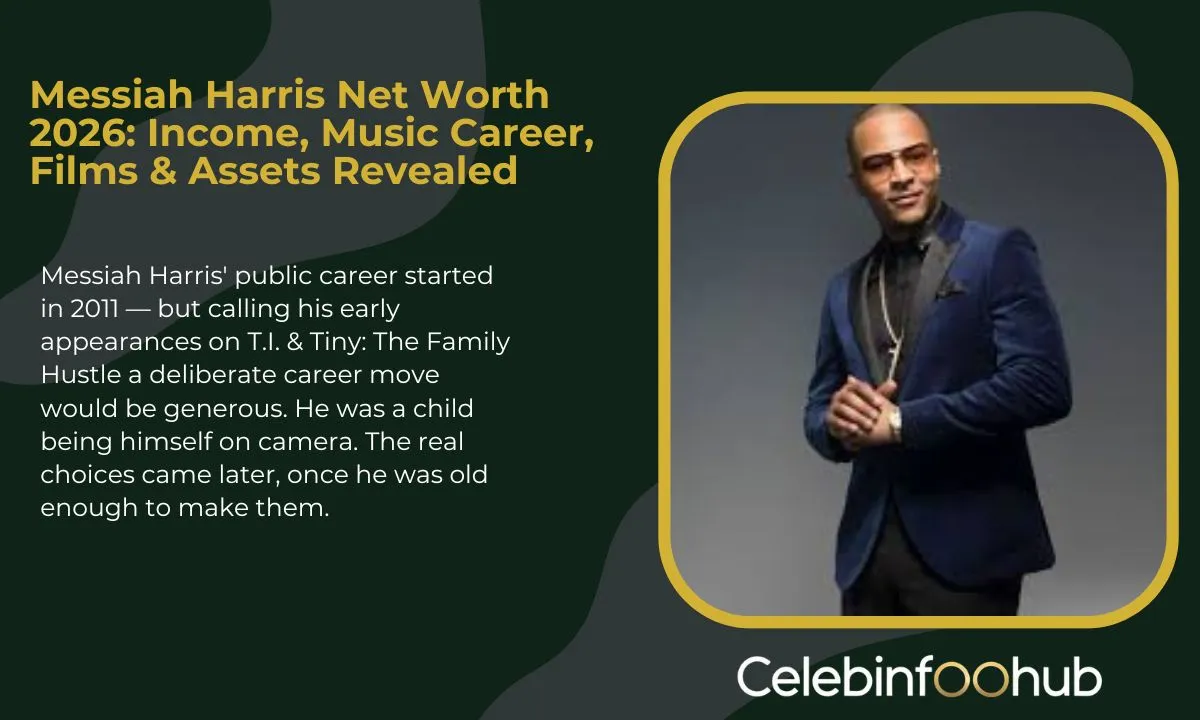
Messiah Harris’ public career started in 2011 — but calling his early appearances on T.I. & Tiny: The Family Hustle a deliberate career move would be generous. He was a child being himself on camera. The real choices came later, once he was old enough to make them.
| Year | Career Milestone |
|---|---|
| 2011 | Appears on T.I. & Tiny: The Family Hustle — public debut as a child on VH1 |
| 2014 | T.I. gifts him a truck — viral moment sparks discussion about celebrity parenting |
| 2017 | Family Hustle ends — Messiah steps toward building an independent path |
| 2018 | Acting debut in The Products of the American Ghetto |
| 2019 | Film role in The Trap — acting career gains real traction |
| 2022 | Cast in Sons 2 the Grave — most recent confirmed film credit |
| 2023 | Buddy Red music identity becomes more public-facing |
| 2025–26 | Growing social media presence and continued music output as Buddy Red |
The 2014 truck moment — when T.I. famously gave Messiah a vehicle with a lesson attached — briefly made him a talking point in conversations about celebrity parenting and wealth. T.I.’s framing of the gift, centered on responsibility rather than entitlement, gave people a different image of the Harris family.
By 2018, he was stepping onto film sets. By 2023, he was performing music under a name that had nothing to do with his father. That progression is not accidental. It reflects someone who understood that the easiest path — trading on the family name — was also the least interesting one.
Messiah Harris Acting Career: Film Roles and Estimated Per-Project Earnings
Messiah Harris has acting credits in at least three film productions, plus years of reality television experience. That’s a real foundation — not a full career yet, but the beginning of one that’s being built carefully.
The Products of the American Ghetto (2018) was his first significant film role. This independent production carried themes rooted in African American urban experience. Landing a meaningful role — rather than a throwaway cameo — was a decent debut for any young actor working outside the studio system.
The Trap (2019) followed. Another independent production, another opportunity to build screen presence and craft. Indie films at this level rarely pay Hollywood salaries. But they provide something arguably more valuable at this stage: real industry relationships and on-set experience. First and second-time actors on productions like these typically earn anywhere from $5,000 to $50,000 per project, depending on budget and role size.
Sons 2 the Grave (2022) is his most recent confirmed credit. By this point, Messiah had more screen time behind him, which likely translated to slightly better terms. More importantly, it showed he was still actively pursuing acting — not just music.
Acting Career Summary
| Title | Year | Type | Est. Pay Range |
|---|---|---|---|
| T.I. & Tiny: The Family Hustle | 2011–17 | Reality TV | Family ensemble contract |
| The Products of the American Ghetto | 2018 | Indie Film | $5,000 – $25,000 (est.) |
| The Trap | 2019 | Indie Film | $10,000 – $30,000 (est.) |
| Sons 2 the Grave | 2022 | Indie Film | $15,000 – $50,000 (est.) |
These are industry estimates based on comparable productions — not confirmed figures. The point is context: he’s not earning Marvel money, but he’s not working for free either. One element often overlooked here is acting royalties. If any of these projects continue to stream on platforms that pay residuals, Messiah receives passive income from work he finished years ago.
The honest assessment? He hasn’t had the breakout role yet. He’s still building. But his consistent output suggests someone playing a long game — and that approach tends to pay off better than chasing overnight fame.

Buddy Red: Messiah Harris Music Career, Songs, and Streaming Income Explained
As Buddy Red, Messiah Harris plays blues rock — and if you weren’t expecting that from a rapper’s son raised in Atlanta hip-hop culture, you’re not alone. Neither was anyone in his circle. That’s precisely what makes it interesting.
The stage name itself is deliberately distanced from the Harris family brand. “Buddy Red” is warm, approachable, and rooted — none of which immediately suggests celebrity lineage. Whether he chose it to keep expectations manageable or simply because it felt right, the effect is the same: you encounter his music on its own terms.
Why Blues Rock?
Blues rock sits at the intersection of raw guitar work, American roots music, and soul. Artists like Gary Clark Jr. have proven in recent years that this genre still connects with modern audiences — especially younger listeners who’ve grown tired of algorithmically polished pop. Messiah’s choice to go this direction was either brave or brilliant. Probably both.
For the son of a Grammy-associated hip-hop artist, choosing a genre that’s fundamentally acoustic and guitar-driven sends a clear message: I’m building something mine. He’s not competing with his father’s legacy. He’s creating a parallel one.
Songs, Releases & Where to Find His Music
Specific Buddy Red discography details remain harder to pin down publicly — and this article won’t invent numbers to fill that gap. What’s confirmed is that he releases music under the Buddy Red name on platforms including Spotify and YouTube. Searching “Buddy Red” on either platform is the most direct way to find his current catalog.
How Independent Music Income Works at This Level
For an independent artist like Buddy Red, income comes from several channels:
- Streaming revenue: approximately $0.003 – $0.005 per stream across Spotify and YouTube combined
- Live performances: local and regional shows typically pay $500 – $5,000 per gig depending on venue size
- Merchandise: modest but consistent revenue for artists with a dedicated fan base
- Sync licensing: if tracks get placed in film or TV, this can be a meaningful one-time payment
What’s clear is that Buddy Red is not a side hobby. Messiah is investing real time into this identity and this sound. And given the direction of music consumption — where niche audiences are increasingly powerful — a young blues rock artist with Atlanta entertainment scene credibility has real long-term potential.
Messiah Harris Net Worth 2026: How Much Is He Really Worth?
Messiah Harris net worth in 2026 is estimated between $500,000 and $3.36 million.
The conservative $500K accounts for confirmed income sources — acting fees, streaming income, and basic social media revenue. The higher $3.36M figure factors in active brand deals and a more optimistic read of his music income.
Neither number is wrong. They reflect different assumptions about information we don’t fully have — and Messiah keeps his financial life private, which is his right.
Year-by-Year Wealth Growth Estimate
| Year | Estimated Net Worth | Key Driver |
|---|---|---|
| 2022 | $150,000 – $300,000 | Sons 2 the Grave + early Buddy Red music |
| 2023 | $200,000 – $500,000 | Buddy Red identity takes public shape |
| 2024 | $300,000 – $1,500,000 | Social media growth + brand deal opportunities |
| 2025 | $400,000 – $2,500,000 | Increased music activity and live performances |
| 2026 | $500,000 – $3,360,000 | Full multi-stream income model active |
One factor that almost never shows up in these calculations is the Harris family network. Growing up around T.I.’s business connections — major labels, film producers, Atlanta investors — gives Messiah access to rooms that most 25-year-olds simply can’t get into. That network has financial value, even when it doesn’t appear on a balance sheet.
How Does Messiah Harris Make Money? All Income Sources Explained
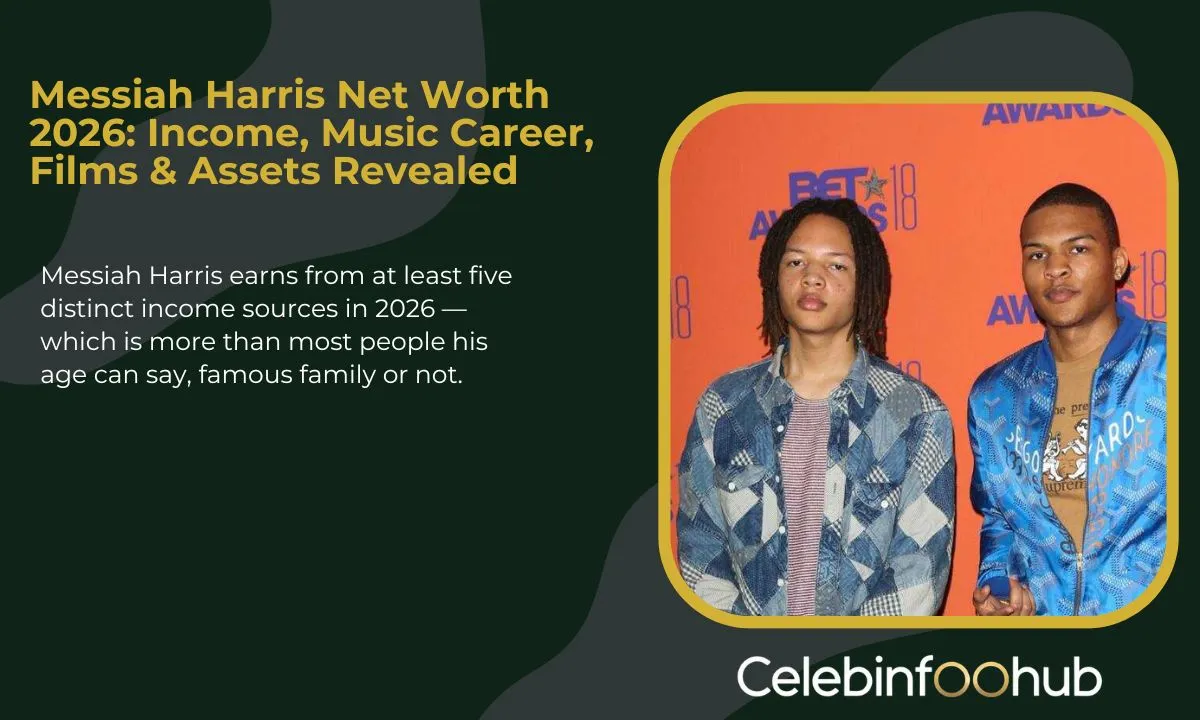
Messiah Harris earns from at least five distinct income sources in 2026 — which is more than most people his age can say, famous family or not.
Acting fees and royalties form the oldest and most passive part of his income. Every time The Trap or Sons 2 the Grave streams on a platform that pays residuals, there’s a small check involved. Buddy Red music is the most exciting category to watch going forward — blues rock audiences are loyal, and loyal fans support artists through streaming, merchandise, and live tickets more consistently than casual listeners do.
Social media is where things get genuinely interesting. Messiah maintains a presence on Instagram and TikTok. At even a modest 100,000 followers with strong engagement, a single sponsored Instagram post could bring in $1,000 – $3,000. That’s not trivial income for an independent artist.
Income Sources Breakdown
| Source | Est. Annual Income | Notes |
|---|---|---|
| Acting royalties | $5,000 – $20,000 | Passive income from prior film/TV projects |
| Buddy Red music (streaming + live) | $10,000 – $80,000 | Active — depends on releases and touring |
| Social media sponsorships | $12,000 – $60,000 | Instagram/TikTok sponsored content deals |
| Brand endorsements | $10,000 – $50,000 | Unconfirmed; industry estimate for his profile |
| Harris family network opportunities | Variable | Hard to quantify — structural career advantage |
The Harris family network is the wild card nobody talks about. T.I.’s connections span major labels, film production, Atlanta’s business community, and national celebrity circles. For Messiah, that means phone calls get returned. Doors open. Opportunities surface that aren’t publicly announced. That kind of structural access quietly shapes a career in ways that straight income figures simply can’t capture.

Messiah Harris vs His Siblings: T.I.’s Children Net Worth Compared
The Harris siblings are one of Atlanta’s most watched celebrity families — and each one is building something different. Comparing them isn’t just interesting gossip. It shows how differently fame and financial trajectory can play out for children raised in the same household with the same advantages.
| Name | Age | Profession | Est. Net Worth | Known For |
|---|---|---|---|---|
| Messiah Harris | 25 | Actor, Blues Rock (Buddy Red) | $500K – $3.36M | Family Hustle, Buddy Red music |
| Domani Harris | 26 | Rapper, Music Artist | $500K – $1M | Solo rap career, Atlanta scene |
| King Harris | 24 | Social Media, Music | $1M – $2M | Viral content, King’s music releases |
| Zonnique Pullins | 30 | Singer, TV Personality | $2M – $3M | Xscape connection, T.I. & Tiny shows |
| Major Harris | 18 | Student (largely private) | Not public | Youngest son, minimal public profile |
| Heiress Harris | 9 | Too young | N/A | Social media appearances only |
Zonnique Pullins is arguably the most financially established of the group, with a longer career runway and diversified income from music, television, and the Xscape connection. King Harris has built a sharp social media presence that could push his numbers higher very quickly — he has that viral energy brands love.
Messiah, through his Buddy Red pivot, might be the most strategically positioned for long-term artistic credibility — even if his net worth isn’t the group’s highest right now. Niche genres with loyal audiences tend to sustain careers better than viral moments that fade. That’s a slightly contrarian take, but music industry history backs it up.
Messiah Harris Personal Life: Relationship, Lifestyle & Spending Habits
Messiah Harris keeps his personal life remarkably private — especially compared to siblings like King, who regularly shares his world with followers. For a 25-year-old raised on a reality TV show, that deliberate silence is actually a statement in itself.
There is no publicly confirmed girlfriend or romantic partner as of 2026. Whether that’s a conscious personal boundary or simply a preference for keeping things offline, it’s hard to say. He doesn’t do the celebrity-relationship-as-content thing — and given how many young public figures have regretted the opposite approach, that might turn out to be wisdom.
His lifestyle reflects his Atlanta roots more than his celebrity inheritance. Public appearances tend to be music-related — performances, studio-adjacent events — rather than red carpet moments. He’s choosing art as his primary public identity, not fame. And that’s genuinely a harder choice than it sounds when your last name opens doors to both.
In terms of spending, there’s no public record of extravagant purchases — no news cycle about a mansion, no social media flex of a car fleet. Either he lives modestly relative to his income, or he keeps his assets very private. Given the estimated net worth range, probably both.
Messiah Harris in His Own Words: Quotes, Facts & What Makes Him Different
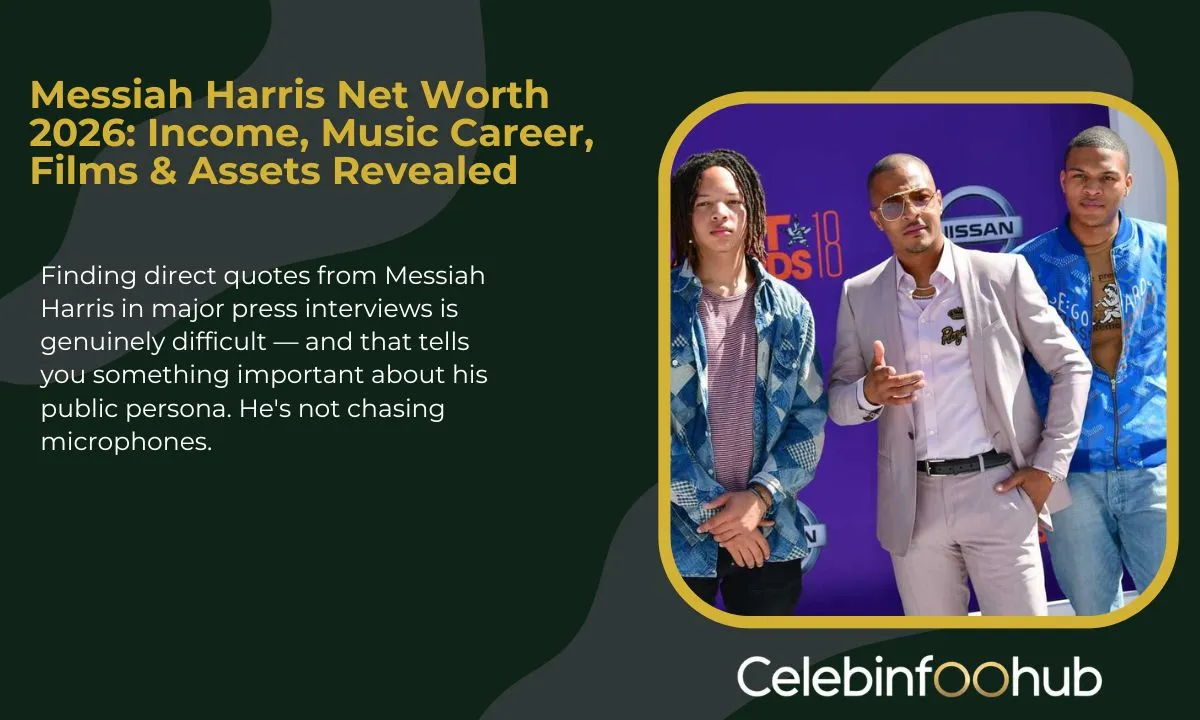
Finding direct quotes from Messiah Harris in major press interviews is genuinely difficult — and that tells you something important about his public persona. He’s not chasing microphones. He’s not doing the press circuit. For someone with his access and family profile, that’s almost unusual. Most people in his position would take every opportunity to build visibility. He doesn’t seem to want it that badly — which, ironically, makes people more curious about him.
T.I. has spoken publicly about his children and his parenting philosophy in various interviews over the years. His approach centers on entrepreneurship, accountability, and not taking the Harris family name for granted. That context helps explain Messiah’s methodical, low-key approach to building his own career. He’s been taught that the name is a starting line, not a finish line.
From what’s publicly available, Messiah has referenced his choice of blues rock as a deliberate departure — not a rejection of his father’s world, but an exploration of his own musical instincts. Choosing to perform as Buddy Red rather than leading with the Harris name suggests someone who genuinely wants to earn his audience without leaning on inherited credibility.
7 Lesser-Known Facts About Messiah Harris
- His full name is Messiah Ya’Majesty Harris — chosen to carry both spiritual and regal significance
- He chose blues rock as his genre — a complete departure from the hip-hop tradition he grew up inside
- The Buddy Red stage name has no widely publicized origin story — which is kind of perfect for someone who values privacy
- He appeared on T.I. & Tiny: The Family Hustle for years as a child but has mostly stayed away from reality TV as an adult
- The 2014 truck story with T.I. briefly made him a talking point in discussions about celebrity family dynamics and wealth parenting
- His siblings range in age from Zonnique at 30 to Heiress at 9 — making the Harris family one of the most age-diverse celebrity families in Atlanta
- He is one of the very few members of a prominent hip-hop family to have built a professional identity in blues-influenced music
Messiah Harris Net Worth Future Projection: Where Will He Be by 2030?
The Acting Path
This is the faster route to significant wealth. One role in a mid-budget studio film can transform an indie actor’s income and visibility in under a year. Messiah has the credits, the family connections, and the screen presence. A genuine breakout isn’t a fantasy — it’s a reasonable next chapter. He just needs the right script to land at the right time.
The Music Path
Slower, but potentially more sustainable. Blues rock has a global audience that mainstream media consistently underserves. If Buddy Red builds a dedicated international following — even a modest one by streaming-era standards — the combined income from live performances, streaming revenue, and merchandise could grow meaningfully. International touring is where independent musicians often find the most financially reliable income.
The Entrepreneurship Angle
T.I. has been vocal about building businesses alongside careers. If Messiah follows that philosophy — and growing up in that household, it would be strange if he didn’t absorb some of it — expect a production company, a label deal, or a strategic brand endorsement to surface in the next few years. The Harris family legacy in Atlanta’s business community is a genuine asset in that kind of play.
He could move faster if he chose to leverage the family name more aggressively. But he seems to prefer a slower road with his own name on the finish line. That might cost him speed. It probably won’t cost him longevity — and in the entertainment industry, longevity is deeply underrated.
Frequently Asked Questions About Messiah Harris

Rizwan Sultan is a content writer with 4 years of experience covering USA celebrities’ net worth and biographies. He specializes in clear, research-driven profiles and currently contributes engaging, accurate content to CelebInfoHub, helping readers understand the stories behind fame and financial success.