

Who Is Simon Yiming Ma?
Most people who quietly build a $500 million fortune end up on magazine covers. Simon Yiming Ma didn’t.
He spent decades running one of Asia’s most respected technology companies without ever once posting on social media, giving a viral interview, or landing on a Forbes list. That kind of invisibility — when you’re worth half a billion dollars — is almost its own art form.
He is the co-founder and CEO of Camelot Information Systems, a Beijing-born enterprise IT services giant that became the first Chinese IT services company ever listed on the New York Stock Exchange.
That’s not a small achievement. That’s historic. Yet somehow, most of the world had no idea he existed until his daughter accidentally pulled back the curtain on a family empire twenty-five years in the making.
What makes him genuinely fascinating isn’t just the money — it’s how he thinks. He’s a mathematician turned entrepreneur who applied the same rigor to business that most people reserve for doctoral research.
The result is a company, a fortune, and a reputation, all built in near-total silence.
Simon Yiming Ma Bio
| Full Name | Simon Yiming Ma (Ma Yiming) |
| Chinese Name | Ma Yiming (马一鸣) |
| Date of Birth | June 15, 1962 |
| Age (2026) | 63 Years Old |
| Nationality | Chinese-American |
| Birthplace | China |
| Profession | Entrepreneur, Mathematician, Tech Executive |
| Undergraduate | East China Normal University — Mathematics |
| Postgraduate | UC Santa Barbara — MS & PhD in Mathematics and Computer Science |
| Early Career | IBM Silicon Valley — Chief Architect (8 Years) |
| Company | Camelot Information Systems |
| Role at Camelot | Co-Founder, Chairman and CEO |
| Founded | 2000, Beijing, China |
| NYSE Listed | 2010 (NYSE: CIS) — $147 Million IPO |
| Went Private | 2014 — Management Buyout at $2.05 per share |
| Wife | Heidi Chou — Co-Founder and President, Camelot |
| Daughter | Rebecca Ma (Becca Bloom) — TikTok Creator, TIME Top 100 |
| Simon Yiming Ma Net Worth (2026) | ~$500 Million (Estimated) |
| Real Estate | 5–6 Properties in Atherton, California |
| Car | Mercedes-Maybach S680 |
| Residence | Atherton, California & Beijing, China |
| Forbes / Hurun | Not Listed — Private company, below billionaire threshold |
| Social Media | Not Active |
Common Misconceptions & Fact Check
Before going further, let’s clear some things up — because there’s a fair amount of wrong information about him circulating online.
Several websites have published completely fabricated details. One site listed his age as 32, his birthplace as San Francisco, his net worth as $150 million, and his education as Stanford University. Every single one of those facts is wrong.
He was born in 1962 in China, studied at East China Normal University and UC Santa Barbara, and his net worth is estimated at around $500 million — not $150 million.
| Common Myth | The Truth |
|---|---|
| He is related to Jack Ma of Alibaba | No family or professional connection — they only share a surname. |
| His net worth is $150 million | Credible estimates place it at approximately $500 million as of 2026. |
| He was born in San Francisco | He was born in China and moved to the US for his postgraduate studies. |
| He attended Stanford University | He earned his MS and PhD from UC Santa Barbara, not Stanford. |
| He is the richest CEO in China | That title belongs to Zhang Yiming of ByteDance. Simon is not on any major wealth list. |
This matters because analytical thinking in business starts with getting the basic facts right. And honestly, the fact that multiple published sites got his biography so badly wrong tells you everything about how private he’s kept himself — there simply isn’t enough public information available to fact-check against.
What Is Simon Yiming Ma’s Chinese Name?
His Chinese name is Ma Yiming (马一鸣). In Chinese naming tradition the surname comes first — so Ma is his family name and Yiming is his given name.
He uses Simon as his Western name in international settings, which is common practice among Chinese-American entrepreneurs who operate fluidly across both markets.
One thing worth repeating clearly: he is not related to Jack Ma. Jack Ma’s Chinese name is Ma Yun (马云). Similar surname, completely different people.
The confusion is understandable — both are prominent Chinese tech figures — but they have absolutely no connection whatsoever.
Who Is the Richest CEO in China?
As of 2026, Zhang Yiming — co-founder and former chairman of ByteDance, the parent company of TikTok — holds the top position among China’s wealthiest individuals. The country’s top billionaires collectively hold close to $2.2 trillion in accumulated wealth.
Simon Yiming Ma is not in that conversation. His estimated $500 million places him comfortably in the upper tier of successful entrepreneurs, but well below the billionaire threshold required for Forbes, Bloomberg Billionaires, or the Hurun Rich List. And given how deliberately private he’s been throughout his career, that’s probably exactly how he prefers it.
Does Simon Yiming Ma Have a Daughter?
Yes — and she is the reason most people are now searching his name.
Simon and his wife Heidi Chou have one daughter, Rebecca Ma, better known online as Becca Bloom. She joined TikTok in early 2025 and almost instantly went viral, building millions of followers with content that showcased an unapologetically luxurious life — private jets, designer fashion, exclusive events, and a white-and-gold Atherton mansion that definitely did not go unnoticed.
She was named to TIME’s 100 Best Creators List in July 2025. Her wedding to Google software engineer David Pownall at Villa Balbiano on Lake Como, Italy in August 2025 was one of the most-watched influencer events of that year.
In a strange twist of fate, a TikTok creator managed to introduce her father to the world more effectively than any Forbes profile ever could.

Early Life, Education, and Mathematical Foundation
Simon Yiming Ma was born on June 15, 1962, in China. From an early age he had a clear aptitude for mathematics — not the vague kind where someone’s just decent with numbers, but a genuine, deep fascination with the discipline itself.
He completed his undergraduate studies at East China Normal University, where that foundation deepened into something more structured and purposeful.
He later moved to the United States and earned both a Master’s degree and a PhD in Mathematics and Computer Science from the University of California, Santa Barbara.
That combination of advanced mathematics and computer science gave him something most entrepreneurs simply never develop — a true structured problem solving approach that is genuinely hard to replicate.
Equations have no room for wishful thinking. Either the proof works or it doesn’t. That same standard of intellectual honesty followed Simon into every significant business decision he ever made.
Early Career at IBM and Entry into Silicon Valley
After finishing his PhD, Simon joined IBM in Silicon Valley and spent the next eight years building real-world expertise inside one of the world’s most demanding technology environments.
He rose to the position of Chief Architect, designing large-scale software solutions for major enterprise clients across industries.
Those eight years were formative in a way that goes well beyond job titles. He learned how to think in systems. He understood enterprise-level execution at a scale most startup founders never encounter.
And — perhaps most importantly of all — it was at IBM where he first met Heidi Chou, the woman who would become both his wife and the co-architect of everything that came next.
That shared IBM experience planted the seed for Camelot Information Systems. Without those years inside one of the world’s great technology companies, the Camelot story might have turned out very differently.
Simon Yiming Ma Net Worth Breakdown 2026
As of 2026, Simon Yiming Ma net worth is estimated at approximately $500 million. Because Camelot Information Systems is privately held, exact figures are never publicly disclosed. Most of what analysts know is pieced together from known asset holdings, industry benchmarks, and historical SEC filings.
Based on Camelot stake, Atherton real estate, and private equity holdings. Exact figures undisclosed — Camelot is privately held.
| Source | Estimated Value | Notes |
|---|---|---|
| Camelot Information Systems | $350–$400 Million | Majority stake in privately held IT firm |
| Atherton, California Real Estate | $80–$100 Million | 5–6 properties in most expensive US zip code |
| Private Equity & Fintech Investments | $30–$50 Million | Cross-border US and China technology holdings |
| Retained Earnings & Other Assets | $20–$30 Million | 25+ years of accumulated Camelot profits |
| Total Estimated Net Worth | ~$500 Million | 2026 industry estimate |
Growth Timeline of Simon Yiming Ma Net Worth
His fortune didn’t come from a windfall. No overnight IPO moment after 2014, no viral funding round, no lucky acquisition. The growth has been steady — almost boringly steady — which is exactly what disciplined execution looks like when it plays out across twenty-five years.
| Year | Estimated Net Worth | Key Driver |
|---|---|---|
| 2020 | ~$320 Million | Camelot’s steady private growth post-buyout |
| 2022 | ~$380 Million | Rising Atherton, California real estate values |
| 2024 | ~$440 Million | Expanding investment portfolio and fintech bets |
| 2025 | ~$503 Million | Strong IT sector performance across Asia |
| 2026 | ~$500 Million | Stabilized across diversified assets |
Primary Sources of Wealth
Break his wealth down and you see the same thing every serious wealth architect builds — multiple engines running simultaneously, no single point of failure.
- Camelot Information Systems is the core asset. As co-founder and majority owner of a leading enterprise IT services firm in Asia, this alone represents an estimated $350 to $400 million of his total wealth.
- Atherton, California real estate — five to six properties in America’s most expensive zip code — adds another $80 to $100 million to the picture.
- Private equity and fintech investments across both the US and China contribute an estimated $30 to $50 million through cross-border technology investments.
- Retained earnings and other assets accumulated over 25+ years of Camelot’s operations account for roughly $20 to $30 million more.
Is Simon Yiming Ma a Billionaire?
Technically, no. As of 2026, his estimated net worth of $500 million places him below the $1 billion threshold required for Forbes, Bloomberg Billionaires, or the Hurun Rich List. He doesn’t appear on any major public wealth ranking.
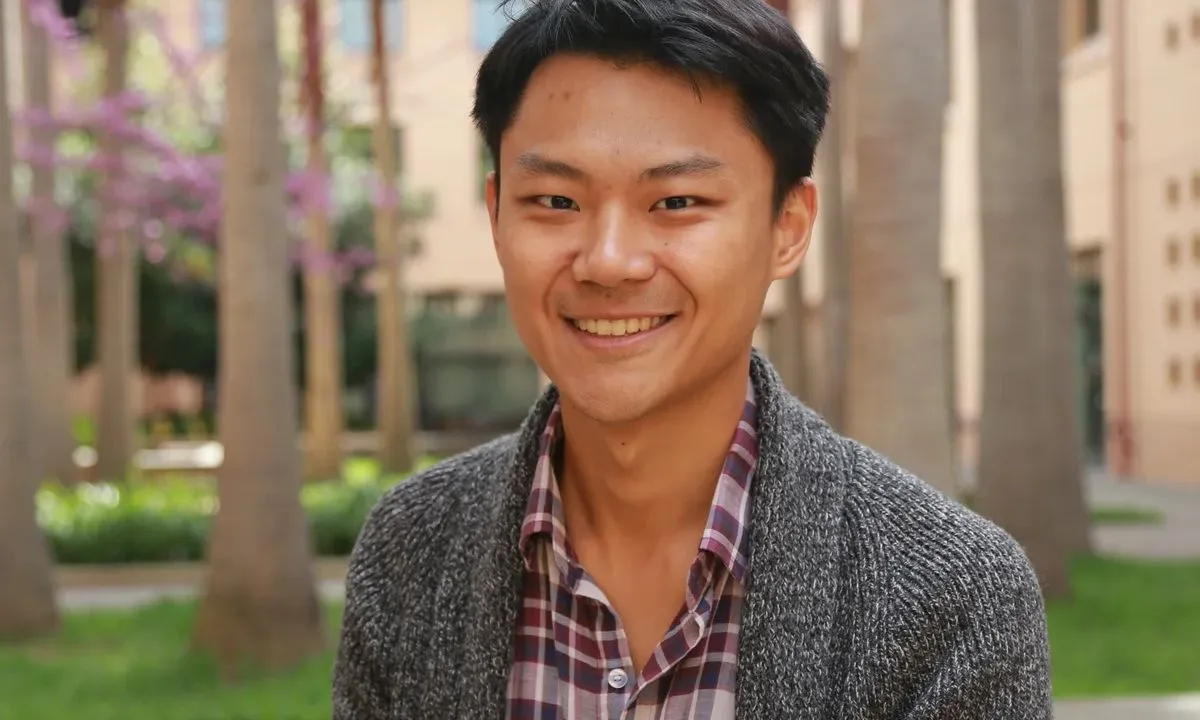
But here’s the complication — Camelot is privately held, which means its true valuation is never publicly disclosed. Private company owners frequently carry significantly more wealth than public records show, simply because there are no mandatory financial disclosures.
Given how dramatically China’s enterprise IT services sector has grown since 2014, Camelot could plausibly be worth several times its original buyout valuation today.
Whether Simon Yiming Ma is technically a billionaire or not may be less clear-cut than that $500 million figure implies.
Camelot Information Systems: The Foundation of His Wealth
In 2000, Simon and Heidi Chou co-founded Camelot Information Systems in Beijing. The timing was close to perfect. China’s corporate sector was entering a massive wave of digital transformation that would reshape the entire economy, and businesses across every major industry were scrambling for guidance on adopting modern IT infrastructure.
Simon spotted that window early and moved quickly to fill it. Within a few years, Camelot had grown into one of China’s leading providers of enterprise technology services, building expertise across:
- SAP implementation consulting for large enterprise clients
- Cloud computing infrastructure and migration advisory
- Financial IT solutions for China’s banking and insurance sectors
- Software development and large-scale systems integration
The company achieved CMMI Level 5 certification — the highest global benchmark for software process quality — which immediately differentiated Camelot from most of its regional competitors. In 2010, it made history by becoming the first Chinese IT services company listed on the New York Stock Exchange, raising $147 million in its IPO.
The Camelot Success Story: Building an Empire
Clients and Sectors That Drove Growth
Camelot didn’t spread itself thin. Simon built the company around a deliberate focus on sectors where trust and precision are non-negotiable — primarily financial services and banking, but also insurance, telecommunications, and manufacturing across the region.
Its client base included some of China’s largest state-owned banks and financial institutions, major national insurers, and multinational corporations operating across East Asia.
These aren’t easy clients to land or keep. They demand reliability, confidentiality, and a level of technical sophistication that most regional IT firms couldn’t deliver consistently. Camelot could — and did.
At its public peak, Camelot generated approximately $265 million in annual revenue and was consistently ranked among China’s top IT consulting service providers.
What Set Camelot Apart
Simon’s background in mathematics gave Camelot something competitors couldn’t easily copy — a culture of genuinely rigorous thinking. He didn’t just hire talented engineers; he built teams that approached problems the way mathematicians do. Methodically, without shortcuts, with an eye always on the long-term outcome rather than the short-term fix.
That culture, combined with Heidi Chou‘s operational expertise as President, created an organization that felt different to work with. Clients noticed. And they kept coming back year after year.
Major Turning Point: Privatization and Buyout
In 2013, Simon made the call that changed everything. He initiated a management buyout to take Camelot private. The going private transaction was completed in 2014 at $2.05 per share. At the time, a 2013 SEC filing valued the company’s equity at $98.2 million.
To outside observers on Wall Street, it looked like a retreat. To Simon, it was the opposite — it was reclaiming control. Taking Camelot private meant no more quarterly earnings pressure, no more short-term market pressure from public shareholders, no more of the noise that public market scrutiny inevitably generates.
Camelot After Going Private: 2014–2026 Journey
Free from the Quarterly Grind
The years immediately after privatization were a period of deliberate reinvention. Without the pressure of public quarterly reporting, Simon could rebuild Camelot‘s service portfolio from the inside out.
He doubled down on higher-margin consulting, expanded the company’s presence across Southeast Asia, and invested in internal technology capabilities that would have been difficult to justify to short-term-focused public shareholders.
By the mid-2010s, Camelot had quietly become one of the more respected players in pan-Asian enterprise IT — not just in China, but across markets beginning to experience their own digital transformation waves.
Expanding Across Asia
The post-privatization growth shifted geographically. Singapore, Hong Kong, and other financial hubs in Southeast Asia became meaningful revenue contributors.
Camelot’s deep expertise in financial sector IT made it a natural partner for regional banks and insurers upgrading their core systems and compliance infrastructure.
This was deliberate expansion, not opportunistic growth. Simon was applying the same long-term vision to Camelot’s geography that he had applied to its service quality from the very beginning.
Evolving the Service Mix
By 2020, the service mix had shifted significantly. Pure implementation consulting gave way to more integrated offerings — managed services, digital transformation advisory, and data-driven solutions that placed Camelot closer to the strategic decisions its clients were actually making at the boardroom level.
Camelot in the AI Era: What’s Next?
The Opportunity in Front of Them
The rise of AI and machine learning has created a new kind of pressure for enterprise technology firms — and a significant new opportunity.
Companies that spent years building trust with large financial institutions are suddenly the most valuable advisors in the room as those same institutions try to figure out how to responsibly integrate AI into their core operations.
Camelot sits in an unusually strong position here. Decades of work inside China’s banking and financial services sector means Simon’s team understands the regulatory landscape, the legacy infrastructure challenges, and the risk tolerance of the clients who matter most. That’s not something a newer AI startup can easily replicate.
Where Camelot Could Go
Industry observers who track China’s private enterprise tech space suggest that Camelot’s post-privatization valuation could be several multiples of its $98.2 million 2013 SEC equity figure.
If the company continues growing its AI advisory and managed services practices, and if Simon eventually pursues a strategic exit, the resulting wealth event could push Simon Yiming Ma net worth firmly past the $1 billion mark.
Real Estate Holdings in Atherton
Atherton, California is consistently ranked the most expensive zip code in America. It’s where Silicon Valley’s most successful people quietly plant their flags — no flashy gated communities, no celebrity streets, just understated wealth behind mature trees and long private driveways.
His daughter Becca Bloom grew up in Atherton and has given her TikTok followers more than a few glimpses of the family’s white-and-gold mansion. For a man who avoids public attention, his daughter’s content has accidentally done more property PR than he probably ever intended.
Investment Portfolio and Private Equity Activities
Beyond Camelot and real estate, Simon has quietly assembled a fintech investment portfolio spanning both the United States and China.
His investments include technology startups, private equity funds, and cross-border technology investments that draw on his deep understanding of both markets simultaneously.
The edge he brings to these investments is specific and hard to replicate. He isn’t a generalist investor placing bets on trends he read in a newsletter.
He knows exactly which enterprise technology problems are genuinely hard to solve, which markets are actually ready for disruption, and which promising-sounding ideas are just that — ideas with no structural foundation.
Investment Strategy and Financial Philosophy
Simon’s approach to building and preserving wealth is disciplined in a way that’s increasingly rare. He doesn’t panic during market downturns. He doesn’t chase trends. He doesn’t make bets he can’t fully understand from first principles.
His long-term investment strategy is built around three core principles that have remained consistent throughout his career:
- He only invests where he has genuine knowledge and a real competitive edge.
- He prioritizes operational flexibility over maximum short-term returns in every scenario.
- He keeps his asset base diversified enough that no single market event can meaningfully damage his overall financial position.
None of that is glamorous. But it’s what quiet wealth accumulation actually looks like in practice — not one big score, but decades of small, correct decisions compounding steadily in the background.
Simon Yiming Ma and Heidi Chou?
A Partnership That Built an Empire
Simon Yiming Ma and Heidi Chou are, without question, one of the most consequential tech couples most people have never heard of. They met at IBM in Silicon Valley, where both were building serious careers in enterprise technology.
What started as a professional relationship grew into a life partnership that would eventually reshape the landscape of Asian enterprise IT entirely.
Heidi Chou: More Than a Co-Founder
Heidi Chou serves as President of Camelot Information Systems, and her role has always been far more than ceremonial. While Simon brings the mathematical depth, the technical architecture vision, and the long-range strategic thinking, Heidi brings the operational backbone that keeps everything actually running.
She is, by all accounts, an equal architect of everything Camelot has achieved. Her background at IBM gave her the same rigorous corporate training that shaped Simon — and her ability to translate that into a high-performance organization in Beijing’s competitive tech environment is something that rarely gets the credit it deserves in coverage of this family.
People often search for Simon Yiming Ma and Heidi Chou together, and that framing makes complete sense. This has always been a shared story of sustained wealth creation, built by two people who happened to meet at the right company at the right moment and chose to build something real together.

Family Life: Heidi Chou and Becca Bloom Influence
The Private Family Goes Public
For more than two decades, the Ma family operated almost entirely off the radar. Simon and Heidi Chou focused completely on Camelot while raising Rebecca in Atherton, California.
No magazine profiles, no charity galas, no Instagram accounts. Just a family building something meaningful and quietly in the background. That changed in January 2025, when Becca Bloom joined TikTok.
Becca Bloom: The Accidental Reveal
Within weeks she had millions of followers drawn to her luxury content, financial advice videos, and natural camera presence. She wasn’t hiding her background — the private jets, designer clothes, and Atherton mansion all featured prominently.
Named to TIME’s 100 Best Creators List in July 2025, Becca Bloom became something genuinely unusual — an influencer whose fame accidentally introduced a very private family empire to a very curious global audience.
Her wedding to David Pownall, a Google software engineer, at Villa Balbiano on Lake Como in August 2025 was one of TikTok’s most-followed events that year. The location alone — one of Italy’s most exclusive lakeside properties — communicated everything about the family’s financial standing without anyone having to say a word directly.
In a strange way, Becca did more for public awareness of her father’s story than any PR campaign ever could have. And Simon, presumably, watched all of it from Atherton with the calm of a man who has always believed that real success doesn’t need an audience.
Lifestyle and Personal Habits
Despite sitting on an estimated $500 million fortune, Simon Yiming Ma’s personal lifestyle is remarkably understated by any measure. He splits his time between Atherton, California and Beijing, China, moving between his two worlds of business without much fanfare or visible entourage.
He drives a Mercedes-Maybach S680 — a car that signals serious money to anyone who knows cars, but isn’t the kind of vehicle that makes tabloid news. Quiet quality over loud luxury.
That phrase sums him up better than most. No public social media accounts. No speaking circuit. No major media interviews that anyone can easily locate. For a man of his considerable means, the restraint is striking — and almost certainly deliberate.
The Influence of Dual Cultural Identity
One of the least-discussed advantages Simon has always carried is his ability to operate fluently across two of the world’s most powerful economies.
As a Chinese-American entrepreneur, he understands both the business culture of China — the relationship dynamics, the government sensitivities, the way decisions actually get made behind closed doors — and the corporate environment of Silicon Valley.
That dual cultural identity is a genuine competitive advantage that no business school course can teach. It comes from living in both worlds long enough to internalize their unwritten rules.
Simon could speak the language of Chinese corporate clients while simultaneously meeting the expectations of NYSE investors and Silicon Valley partners. In a fragmented global economy, that kind of cross-cultural fluency is worth an enormous amount.
Unique Traits That Define His Success
What separates Simon Yiming Ma from the thousands of other talented people who built companies but never reached $500 million? Honestly, it’s probably a combination of things that don’t get nearly enough credit in the usual entrepreneur narrative.
His UC Santa Barbara PhD in Mathematics and Computer Science is genuinely rare among CEOs at his wealth level. That kind of training doesn’t just give you knowledge — it gives you a fundamentally different relationship with uncertainty, risk, and problem-solving.
Mathematicians are comfortable sitting with a hard problem without rushing to a convenient wrong answer. That patience is worth an enormous amount in business.
- He achieved the historic first of listing a Chinese IT services company on the NYSE, which required exceptional institutional credibility that most Chinese firms of that era couldn’t demonstrate.
- He took Camelot private when market conditions were right for him, not when it was convenient for public perception.
- He maintained CMMI Level 5 certification throughout — the kind of quality commitment that builds deep long-term client trust rather than short-term revenue spikes.
- He stayed out of the public eye entirely, eliminating the distractions that derail a surprising number of otherwise-capable founders.
How Simon Yiming Ma Compares to Other Chinese-American Tech Billionaires
Jensen Huang — NVIDIA
Jensen Huang, co-founder and CEO of NVIDIA, is arguably the most celebrated Chinese-American entrepreneur of the current era. His company’s central role in the AI hardware revolution has pushed his net worth into the tens of billions.
The comparison with Simon is interesting — both are methodical, long-horizon thinkers who built with discipline rather than hype. But Huang bet on chips and specialized hardware at the exact right moment in computing history, while Simon operated in the quieter world of enterprise services consulting.
Zhang Yiming — ByteDance
Zhang Yiming, the ByteDance founder, represents the opposite end of the spectrum entirely — massive consumer platform, massive global scale, massive public attention and regulatory scrutiny. Simon’s entire philosophy of building is essentially the inverse of ByteDance’s playbook. Different strategies, different outcomes, different levels of public scrutiny.
Jerry Yang — Yahoo
Jerry Yang, co-founder of Yahoo, is perhaps the closest cultural comparison — a Chinese-American entrepreneur who built a significant company at the intersection of Silicon Valley and Asian markets.
Simon’s story, by contrast, appears to be one of consistently executed intention. He didn’t swing for the cultural fences. He built something durable and kept growing it on his own terms.
Philanthropy and Social Impact
Simon’s approach to giving mirrors his approach to building wealth — strategic, measured, and focused entirely on long-term impact rather than the kind of headline-generating one-off donations that look good in press releases but rarely move the needle on anything significant.
He has committed substantial resources to education initiatives, firmly believing that access to quality education is the most durable driver of genuine upward mobility.
The results of those commitments are harder to photograph than a charity gala — but they tend to outlast them by decades.
Ma Foundation: Deep Dive
Origins and Mission
The Ma Foundation was established in 2023 with a specific, deliberately narrow focus: scholarships for underprivileged students pursuing careers in technology and business. Simon clearly believes that doing one thing exceptionally well beats spreading limited resources across a dozen worthy-sounding causes without real depth in any of them.
Impact So Far
The scholarships aren’t purely financial — they include mentorship connections and career support infrastructure, which reflects Simon’s view that the real value of a great education comes from the network and guidance surrounding it, not just the degree on the wall.
The Long Game
He prefers funding programs that create systemic change over time rather than one-off donations that generate applause and then disappear. It’s the same long-term vision that built Camelot applied to making a genuine difference in people’s lives.
Challenges and Controversies
Building a $500 million fortune across twenty-five years in two of the world’s most competitive economies doesn’t happen without genuine friction along the way.
Camelot faced significant regulatory pressure in 2024 when government agencies raised questions about certain business practices. Simon’s response was to engage transparently and cooperatively rather than deflect — and the experience ultimately strengthened the company’s compliance frameworks significantly.
Competition has been a constant pressure throughout Camelot’s history. Well-funded rivals have repeatedly targeted its market share in China’s fast-moving enterprise IT services sector.
Simon’s consistent answer has been to double down on service quality and technical innovation rather than getting pulled into price wars that ultimately benefit no one.
Lessons from Simon Yiming Ma’s Financial Journey
- Build on a real foundation. His PhD wasn’t just a credential — it was a thinking tool that shaped every major business decision for the next thirty years.
- Pick your timing carefully. Entering China’s IT market in 2000, just as digital transformation was accelerating, reflected informed timing backed by deep market understanding — not luck.
- Control is more valuable than capital. Taking Camelot private in 2014 meant trading public market liquidity for operational flexibility — a trade that has looked very good in the decade since.
- Diversify deliberately. Spreading wealth across Camelot, Atherton California real estate, and a fintech investment portfolio created a resilient wealth structure that no single market event can meaningfully damage.
- Privacy, maintained consistently, is a strategic advantage. By avoiding unnecessary public attention, Simon stayed focused entirely on building value — no distractions, no noise.
- Think in decades. Every major move he made reflected a long-term vision that most people simply don’t have the patience to execute.
Future Outlook and Wealth Projections
The factors aligning in Simon’s favor over the next several years are genuinely hard to ignore. Enterprise IT services across Asia continue growing at a healthy pace. The demand for AI integration advisory — exactly the kind of high-trust, high-complexity work that Camelot is positioned to deliver — is accelerating rapidly across the financial sector.
Add ongoing Atherton California real estate appreciation to the equation, along with expanding private equity positions, and the trajectory points clearly upward. The quiet empire he built over twenty-five years isn’t done growing yet. Not even close.
Interesting Facts About Simon Yiming Ma
- He holds a PhD in Mathematics and Computer Science from UC Santa Barbara — one of the rarest academic backgrounds among tech CEOs at his wealth level anywhere in the world.
- He and Heidi Chou met while both working at IBM in Silicon Valley before co-founding Camelot Information Systems in Beijing in 2000.
- Camelot was the first Chinese IT services company ever listed on the New York Stock Exchange — a historic milestone that required extraordinary institutional credibility.
- His daughter Becca Bloom was named to TIME’s 100 Best Creators List in July 2025, bringing unexpected global attention to her father’s quietly built empire.
- He reportedly owns five to six properties in Atherton, California — consistently ranked the most expensive zip code in the entire United States.
- Despite an estimated $500 million fortune, he does not appear on Forbes, Bloomberg Billionaires, or the Hurun Rich List.
- He is frequently confused with Jack Ma of Alibaba — but the two men share a surname and absolutely nothing else.
- His daughter’s Villa Balbiano Lake Como wedding in August 2025 was one of TikTok’s most-watched events that year.
- He drives a Mercedes-Maybach S680 — one of the very few genuine glimpses into his personal taste and preferences.
- His core belief has remained consistent throughout his career: real success doesn’t need an audience.
Frequently Asked Questions
What is Simon Yiming Ma’s net worth in 2026?
His net worth is estimated at around $500 million in 2026. The majority comes from his stake in Camelot Information Systems, with significant additional value from Atherton California real estate and private equity investments. Because Camelot is privately held, the exact figure is never publicly disclosed.
How did Simon Yiming Ma make his money?
He co-founded Camelot Information Systems in Beijing in 2000 alongside his wife Heidi Chou, and grew it into one of Asia’s leading enterprise IT services companies over the next two decades. Smart real estate investment in Atherton and a diversified asset portfolio added meaningfully to his overall wealth over time.
Is Simon Yiming Ma a billionaire?
Not officially, based on the estimated $500 million figure. But because Camelot is private and its true valuation is never publicly disclosed, it’s genuinely possible his actual net worth is higher than public estimates currently suggest.
Who is Simon Yiming Ma’s wife?
His wife is Heidi Chou, who co-founded Camelot alongside him and currently serves as its President. She is not simply a supportive spouse — she is an equal architect of everything Camelot has built over twenty-five years.
Where does Simon Yiming Ma live?
He splits his time between Atherton, California and Beijing, China. Atherton’s ZIP code is consistently ranked the most expensive in the United States.
Who is Simon Yiming Ma’s daughter?
His daughter is Rebecca Ma, widely known as Becca Bloom. She became a viral TikTok creator in early 2025 and was named to TIME’s 100 Best Creators List in July 2025.
What company did Simon Yiming Ma found?
He co-founded Camelot Information Systems in Beijing in 2000 with Heidi Chou. The company became the first Chinese IT services firm listed on the NYSE in 2010.
What is Simon Yiming Ma’s educational background?
He earned both a Master’s degree and a PhD in Mathematics and Computer Science from the University of California, Santa Barbara. Before that, he completed his undergraduate studies in mathematics at East China Normal University in China.
Why is Simon Yiming Ma not on Forbes?
Two reasons. Camelot Information Systems is privately held and its financial details are never publicly reported. His estimated $500 million net worth also falls below the billionaire threshold required for major wealth rankings like Forbes, Bloomberg Billionaires, or the Hurun Rich List.
What car does Simon Yiming Ma drive?
A Mercedes-Maybach S680 — a car that signals serious wealth to those who know it, without making any kind of public spectacle. Very much on-brand for him.
Is Simon Yiming Ma related to Jack Ma?
No. They share the surname Ma and both are prominent in Chinese tech — but the two men have absolutely no family connection or professional relationship of any kind. This is probably the most common misconception about him online.
What is the Ma Foundation?
The Ma Foundation was established in 2023 with a focus on scholarships for underprivileged students pursuing technology and business careers. It has already supported more than 500 students and reflects Simon’s belief that long-term impact matters far more than short-term visibility.
What happened to Camelot after going private?
After the 2014 privatization, Camelot expanded its geographic reach across Southeast Asia, evolved its service mix toward higher-value advisory and managed services, and invested in capabilities for digital transformation consulting. It has continued growing quietly — exactly as Simon intended when he took it off public markets.
Conclusion
Simon Yiming Ma‘s story doesn’t fit the template most people have for successful entrepreneurs. No founding garage, no billion-dollar IPO announcement, no signature hoodie, no motivational Twitter feed.
Just a mathematician from China who went to California, spent eight years learning from the best at IBM in Silicon Valley, and then quietly built one of Asia’s most respected enterprise technology companies over twenty-five years.
The $500 million is real. So is the disciplined execution behind it. His resilient wealth structure — spread across Camelot Information Systems, Atherton California real estate, and a carefully managed fintech investment portfolio — didn’t happen by accident. It was designed. Patiently, methodically, and almost entirely out of the public eye.
What his daughter Becca Bloom accidentally revealed to the world in 2025 wasn’t just a family fortune. It was the result of a long-term vision executed consistently by two people — Simon and Heidi Chou — who chose to build something real and enduring instead of something famous and fleeting.
He didn’t chase recognition. He just built.

Rizwan Sultan is a content writer with 4 years of experience covering USA celebrities’ net worth and biographies. He specializes in clear, research-driven profiles and currently contributes engaging, accurate content to CelebInfoHub, helping readers understand the stories behind fame and financial success.